SHORING
At Henry Drilling, we provide professional earth retention systems designed to adapt to the specific challenges of any terrain. For your project's containment and excavation support, we offer three of the industry's most efficient shoring methods: Secant Piles, Soldier Piles, and Sheet Piles. Explore the sections below to review the detailed characteristics, advantages, and applications of each system to determine the optimal structural solution for your project.
-
Benefits of Secant Pile Walls
Increased construction alignment flexibility.
Increased wall stiffness compared to sheet piles.
Ease of installation in difficult ground (cobbles and boulders).
Can be used in high water table conditions with little dewatering.
Applications
Secant pile walls are used for:
Shoring
Large diameter access shafts
Large storage tanks
Construction and Installation Process
The walls are formed by constructing intersecting reinforced concrete piles with a usual overlap of three inches.
The Method: Primary piles are installed first. Once they gain sufficient strength, secondary piles are constructed in between them.
Reinforcement: The piles are reinforced with either steel rebar or steel beams.
Drilling Methods: They are constructed by drilling open hole, slurry drilling, continuous flight auger drilling, or using the temporary cased secant pile method.
-
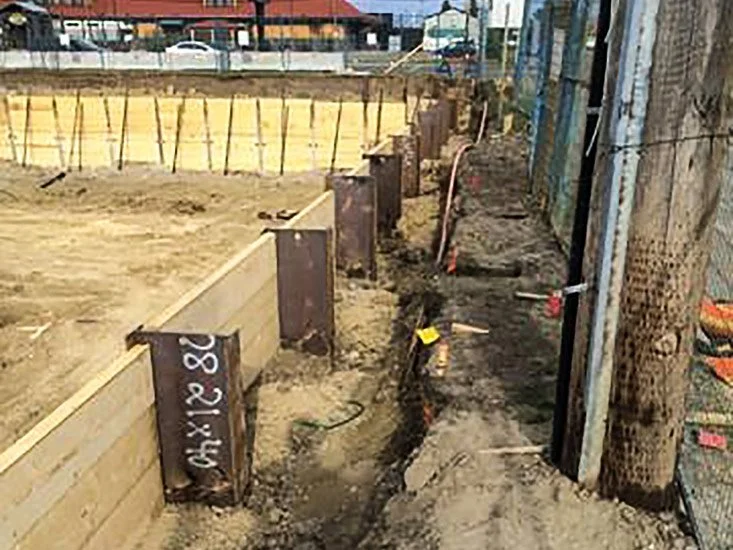
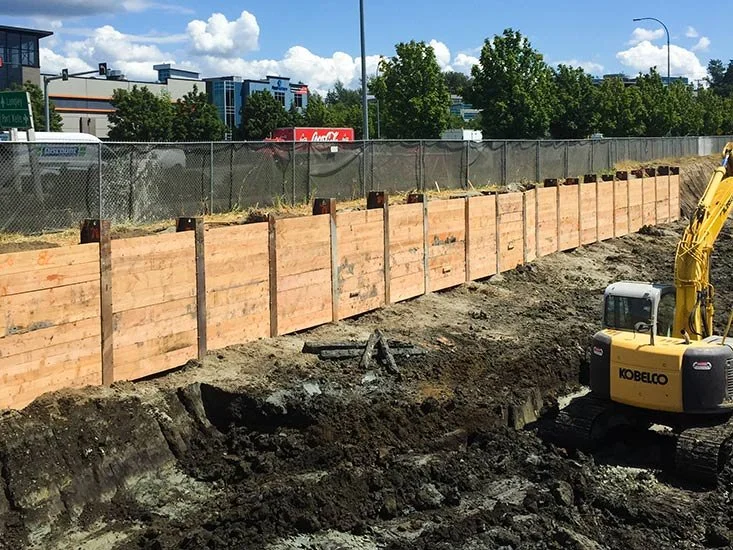
Soldier pile and lagging is an earth retention system consisting of wide flange or H-Pile steel beams driven or placed in drilled holes.
The installation process follows these steps:
Beam Installation: Wide flange or H-Pile steel beams are driven or placed into drilled holes.
Excavation: The earth is excavated in lifts along one side of the beams to expose a cut face of earth and partially expose the front faces of the beams.
Lagging Application: Lagging is installed using either timber or sprayed shotcrete to hold back the soil.
Benefits of Soldier Pile and Lagging
This earth retention method is a viable option for many contractors due to the following advantages:
Inexpensive
Relatively easy to install
Fast to install
Limitations and Ground Conditions
While highly effective for many projects, this specific method does not work well in:
Ground conditions with a high-water table
Non-cohesive soils
-
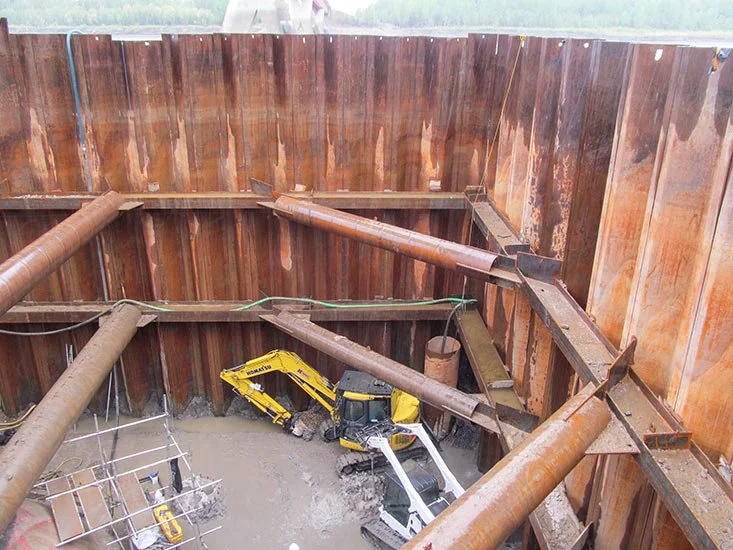
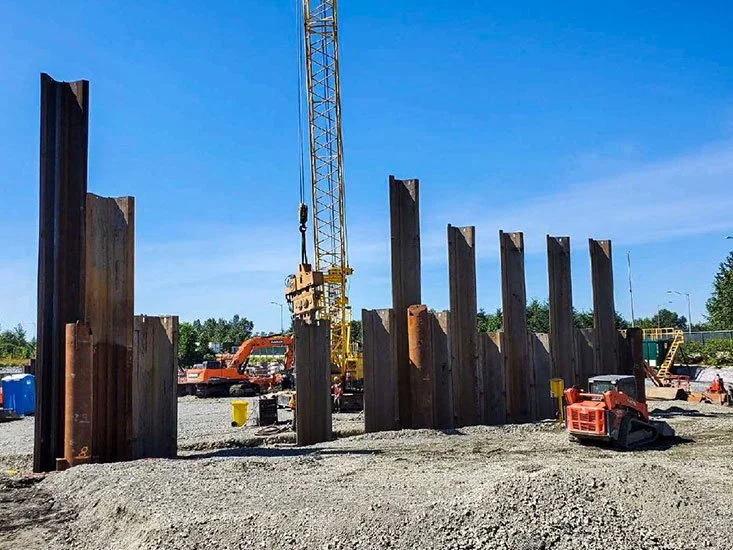
Sheet piles are sections of sheet materials with interlocking edges that are driven into the ground. They are used in both permanent and temporary applications for both shoring and structural work to provide:
Earth retention
Excavation support
Support for foundations
Most commonly made of steel, sheet piles can be installed via top driving or vibratory methods.
Advantages of Sheet Piles
Quick Installations: Fast and efficient to set up on site.
Long Lifespan: Durable over extended periods, both above and below water.
Neat and Clean: The installation process is generally clean and creates no spoils.
Ground Conditions and Limitations
Sheet piles do not work well in dense hard ground or ground with cobbles and boulders. Typically, when encountering these specific areas:
Pre-drilling is required, or
Another method of support will be utilized.
Shoring Project Gallery
-
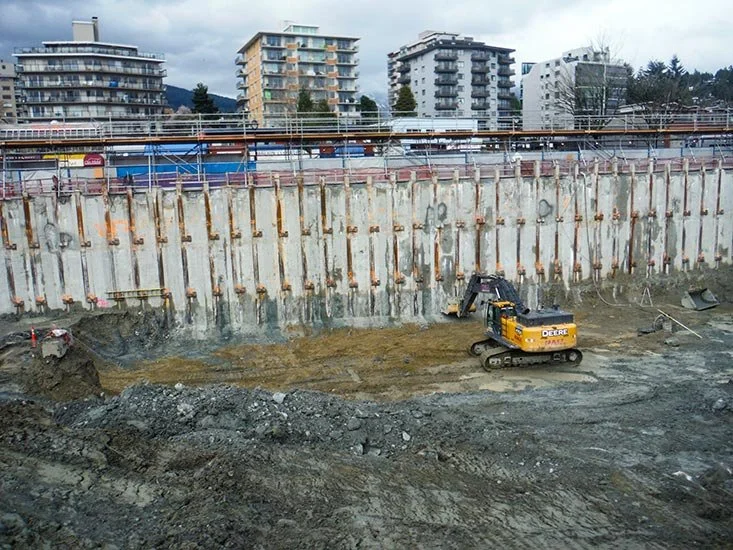
![Construction site with excavator working on dirt and a retaining wall with buildings and cloudy sky in the background.]()
Secant Piles: Ambleside
-
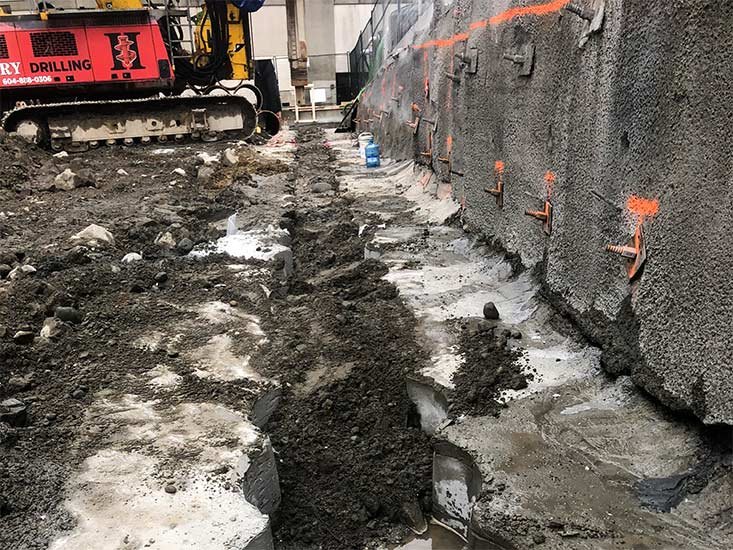
![Construction site with dug-up dirt and concrete along a building wall, orange markings and brackets for future work, a water bottle, part of a yellow excavator, and buildings in the background.]()
Secant Piles: Ovation
-
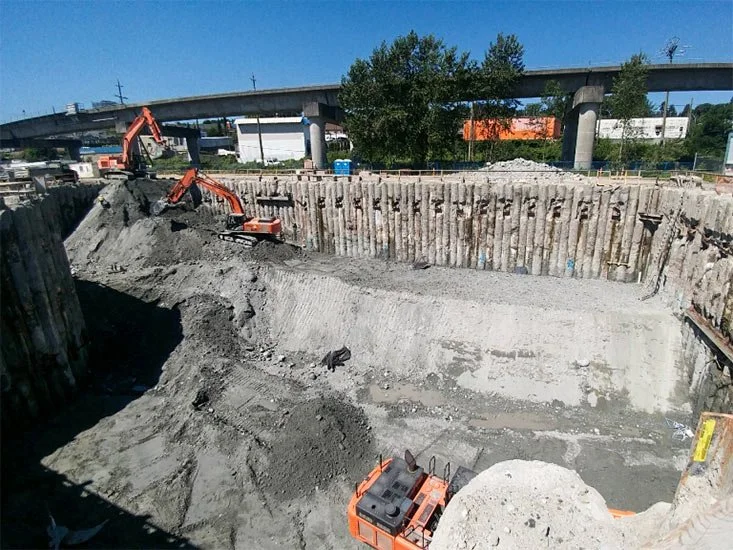
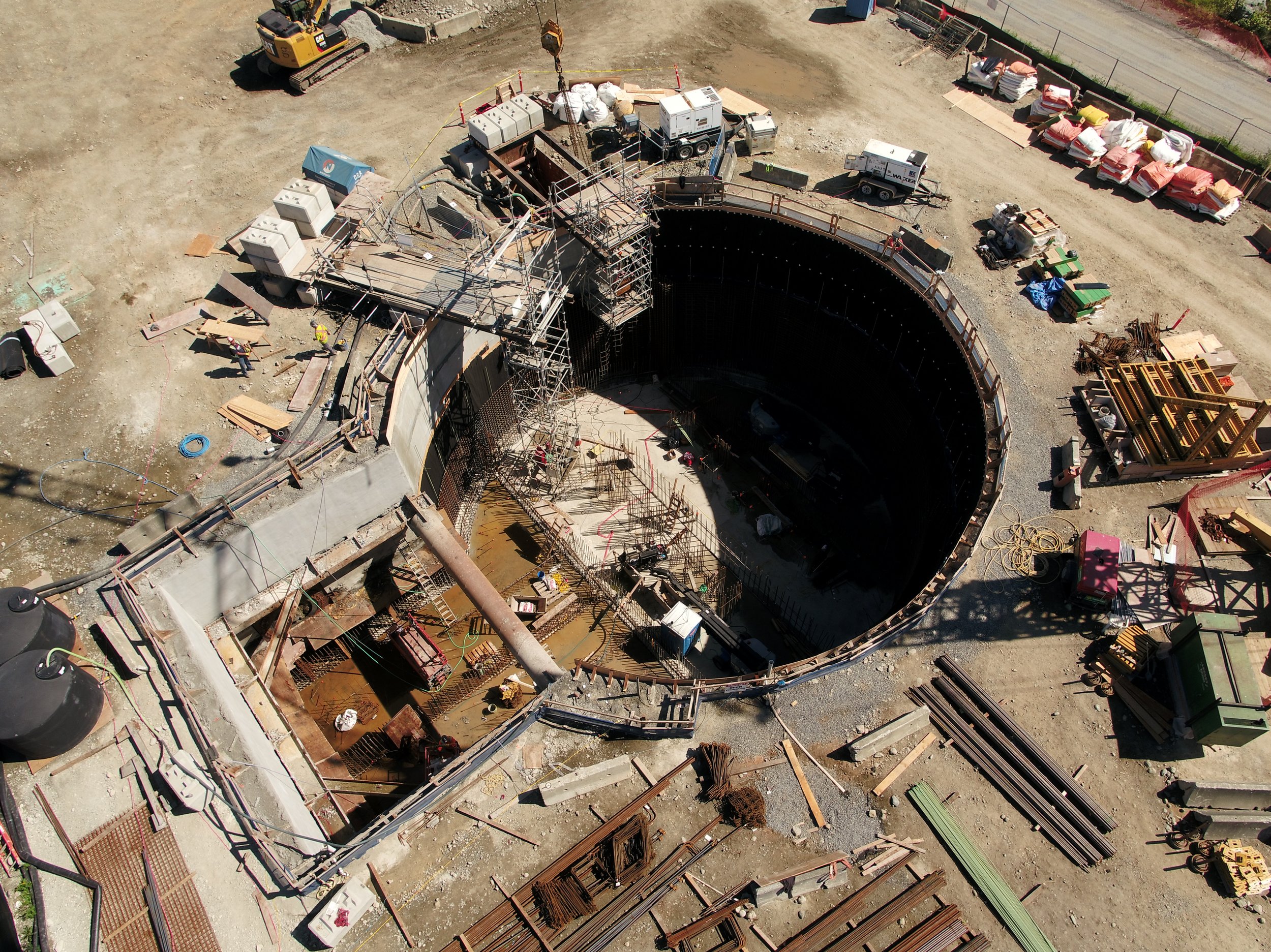
![Construction site with excavators digging a large hole, surrounded by wooden support beams, with overpass and trees in the background.]()
Secant Piles: Sapperton Pump Station
-
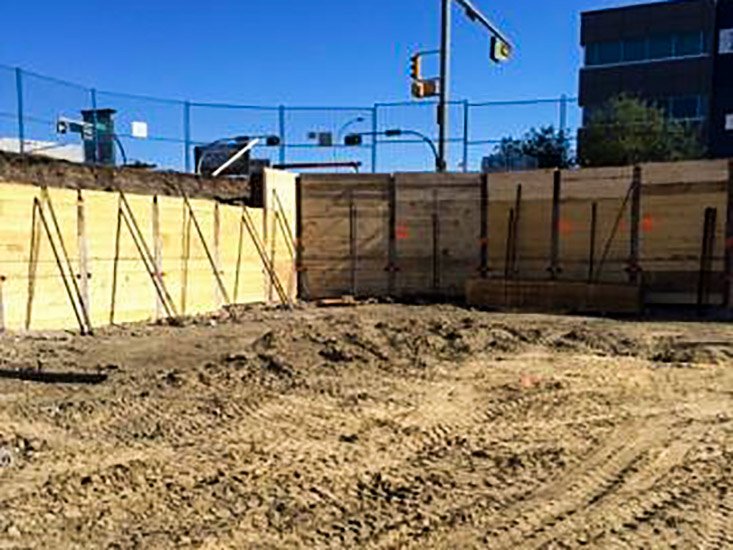
![Construction site with wooden retaining walls, dirt ground, and a traffic light in the background.]()
Soldier Piles and Lagging: Allandale Shoring
-
![Construction site with vertical wooden and metal forms for concrete, dirt ground, and trees along the edge.]()
Soldier Piles and Lagging: Allandale Shoring
-
![Construction site with a wooden barrier, dirt, and an excavator. Buildings, trees, and a blue sky with clouds are in the background.]()
Soldier Piles and Lagging: 200th and 88th Shoring
-
![Construction site with a deep excavation supported by large steel beams and pipes, with a small excavator at the bottom.]()
Sheet Piles: Fort Vermillion
-
![Construction site with steel beams and a crane, preparing for building foundation]()
Sheet Piles: Golden Ears Excavation
-
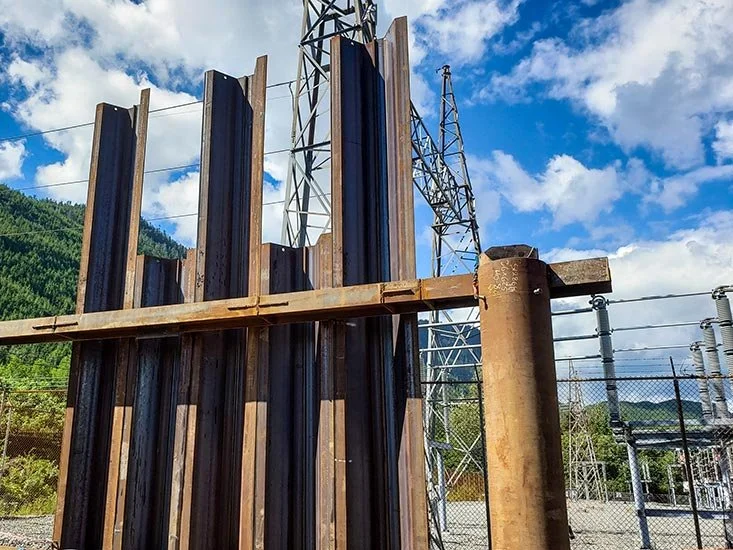
![A fenced industrial area with metal and wooden structures, electrical towers, and power lines under a partly cloudy sky.]()
Sheet Piles: Minette Sub Station