FOUNDATION PILES
At Henry Drilling, we deliver high-capacity deep foundation solutions tailored to meet the structural demands of any project environment. Our specialized fleet and technical expertise cover a comprehensive range of piling methods—including Bored, Oscillator, CFA, Driven, Screw, and Down Hole Hammer (DHH) piles. Explore our capabilities below to find the most efficient, reliable, and cost-effective piling technology for your specific ground conditions.
-
Bored piles are the most versatile and most used technology in deep foundations around the world. This deep foundation method can reach depths of more than 80 metres, making it suitable for almost any job.
Bored piles can be installed through layers of solid rock and other debris with no vibration and very little noise. Additionally, drilling diameters do not have limits, and no permanent, expensive steel casing is required.
Specifications and Dimensions
Typical Hole Diameters: 16 inches to 144 inches
Typical Hole Depths: 10 feet to 200 feet
-
Henry Foundation Drilling Inc has extensive experience with fully cased large diameter drilled shafts. This method is highly effective in all sorts of drilling conditions, including:
Large boulders
Artesian conditions
Loose soils
Hard water bearing tills
Equipment Fleet and Capabilities
To support complex foundation projects, our specialized equipment inventory includes:
Five oscillators ranging from 1500mm to 3050mm
A large selection of segmental oscillator casing
-
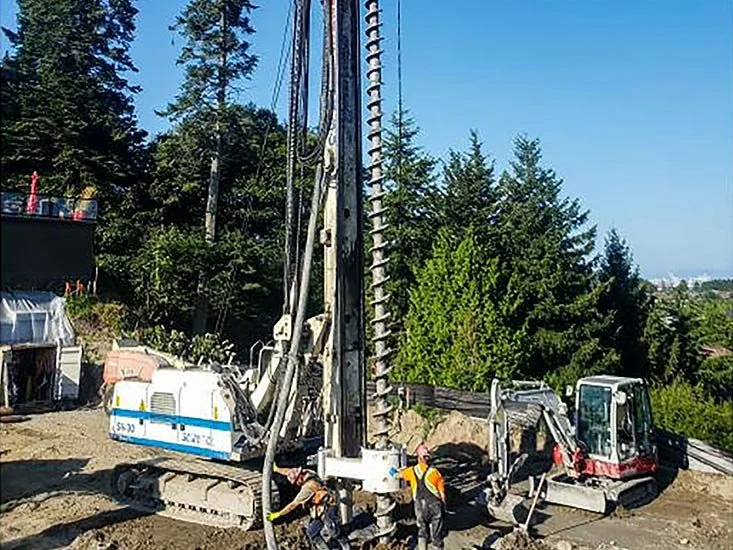
Continuous flight auger piles combine the advantages of driven piles with the versatility of bored piles. This installation method allows piles to be excavated without decompression of the soil, permitting work close to existing structures.
This system makes it much easier to install piles in collapsing soils with no need for casings or drilling slurry.
Advantages of CFA Piles
Town Centre Convenience: No shocks or vibrations are induced when this method is performed. Combined with modern sound-proofed drilling equipment, it is highly suitable for urban construction.
Reduced Excavated Material: The soil brought up to the surface is reduced by as much as 50 per cent compared to bored pile excavations. Because the auger displaces and compacting the soils as it advances, there is less excavated material that has to be transported to a disposal site.
Versatile Soil and Ground Conditions
This drilling method allows piles to be excavated in a wide variety of soils and formations, including:
Dry or water-logged soils
Loose or cohesive soils
Low-capacity, soft-rock formations
Loamy clays, limestones, and sandstone
-
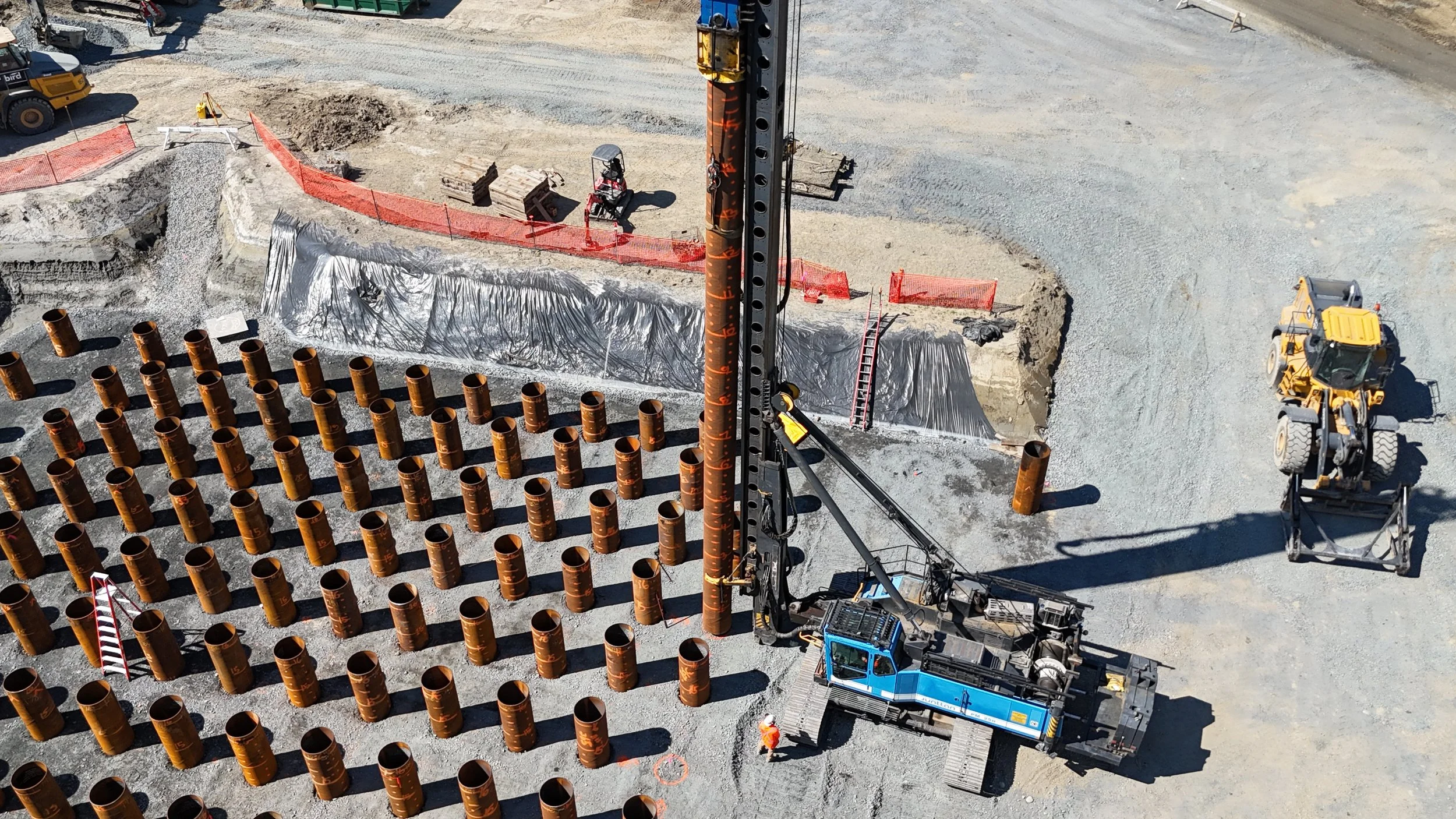
Henry Drilling owns and operates a wide selection of vibratory and diesel hammers for the installation of driven H-piles, pipe piles, caissons, sheet piles, and timber piles.
Our track record includes installing driven pipe piles to over 70m depth, sheet piles up to 80’ in length, and caissons up to 12’ in diameter.
Advantages of Driven Piles
This foundation and earth retention method offers distinct benefits, including the ability:
To verify capacity utilizing PDA testing.
To install them in water or in areas with limited access.
For rapid installation making them a cost-effective solution for many projects.
-
Screw piles can be installed in soft grounds and achieve relatively high loads both in tension and in compression. They can be installed without vibration and are highly suitable for tight areas.
Advantages of Screw Piles
Cost Efficient: Provides an affordable structural solution for many foundation projects.
Reduced Environmental Impact: Because there is less soil displacement, excess soil does not need to be transported from the site. This saves on transportation costs and reduces the carbon footprint.
-
Down hole hammer drilling is an efficient way to drill into medium to hard rock formations.
HFDI has the ability to perform this specialized drilling work using a variety of installation methods, including:
Reverse circulation
Single hammer
Cluster hammer
Ring bit
Foundation Piles Gallery
-
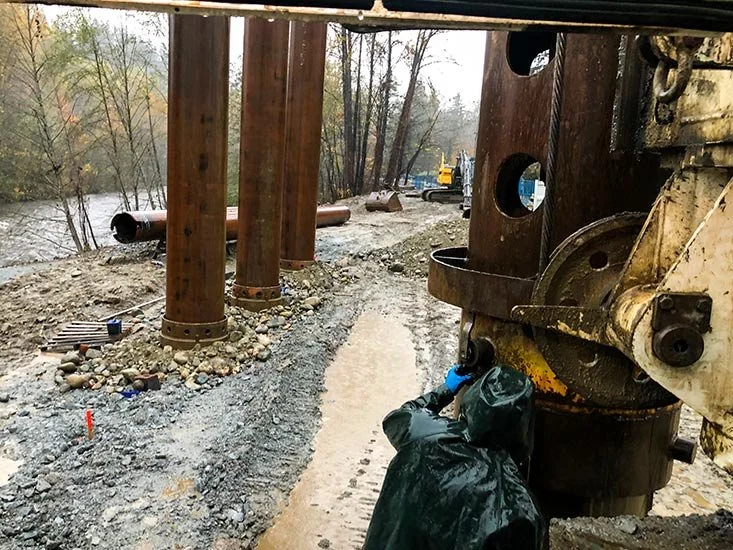
![Construction site with large wooden and metal beams, a muddy dirt path, and heavy machinery in the background. A worker wearing a black raincoat and blue gloves is working near the beams.]()
Bored Piles: Lynn Creek
-
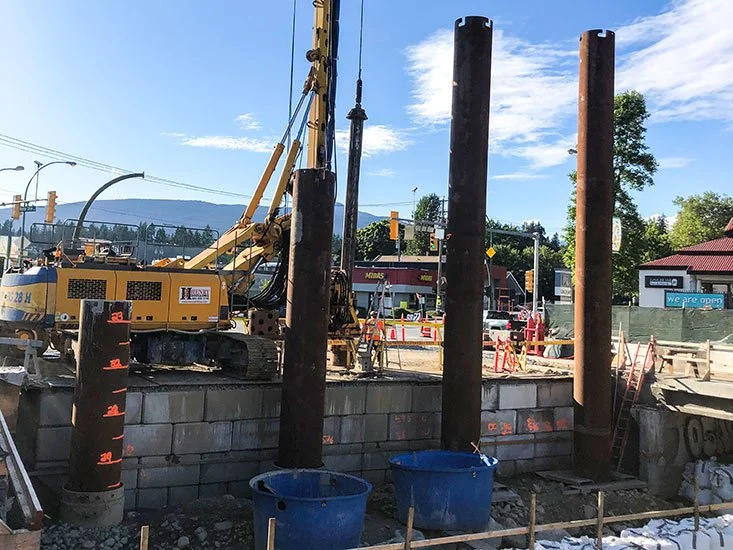
![Construction site showing large steel pilings and a yellow construction vehicle working on a raised platform with a partly cloudy sky in the background.]()
Bored Piles: Mosquito Creek
-
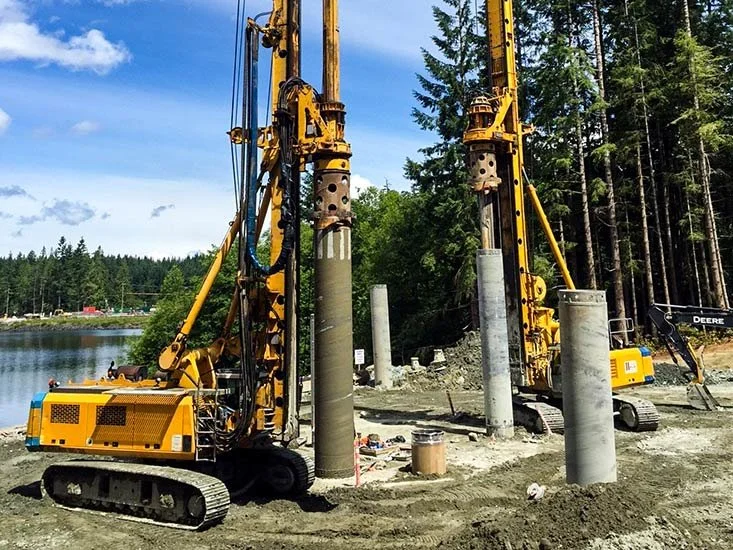
![Two large yellow pile drivers on tracks positioned vertically for foundation work at a construction site near a body of water with tall trees in the background.]()
Bored Piles: Raw Water Intake
-
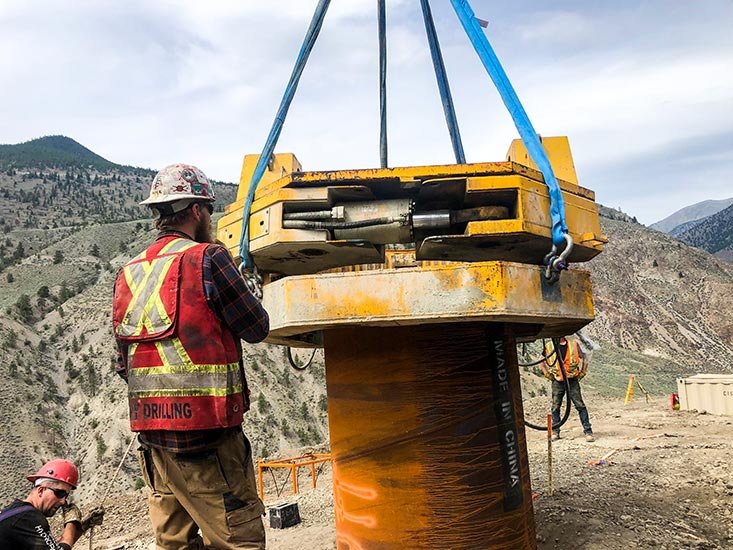
![Construction workers using heavy machinery to lower a large pipe into the ground on a mountain construction site.]()
Large Diameter Oscillator Piles: Lillooet
-
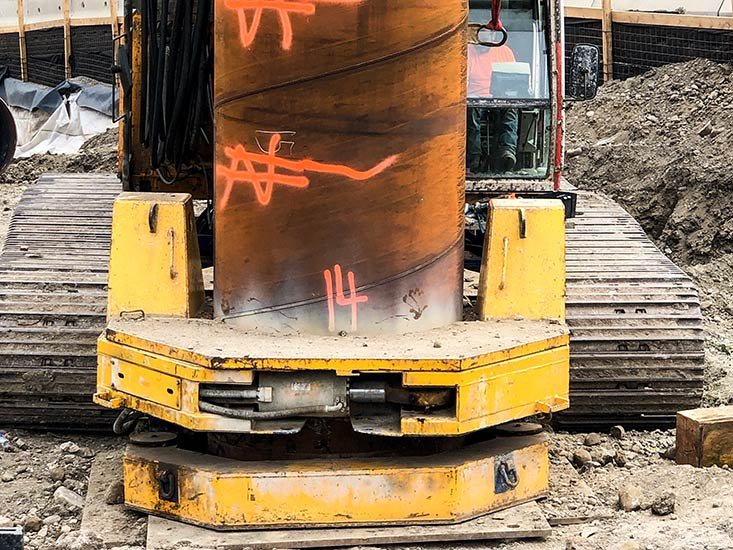
![A construction vehicle with a large metal drilling or core sampling tool, marked with orange spray paint, on a dirt site with wooden and metal fencing in the background.]()
Large Diameter Oscillator Piles: Lillooet
-
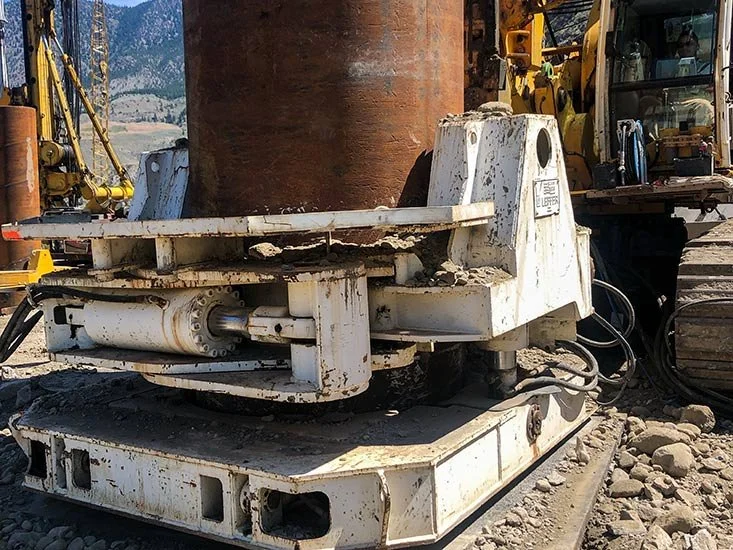
![Close-up of a construction or mining machine part, with visible hydraulic components, mounted on tracks, with construction equipment and dirt in the background.]()
Large Diameter Oscillator Piles: Lillooet
-
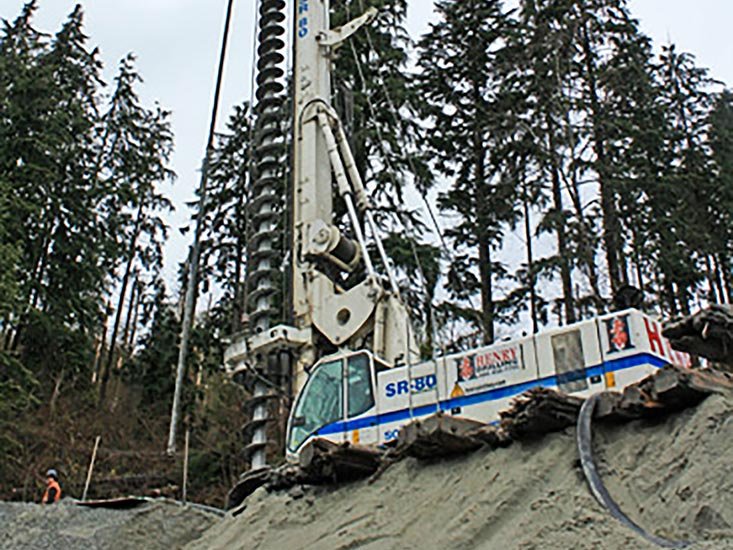
![A large drilling machine positioned on a construction site with trees in the background.]()
Continuous Flight Auger Piles: Coquitlam Watershed
-
![Construction site with a drilling machine and workers in safety gear amidst trees and dirt.]()
Continuous Flight Auger Piles: Tsawwassen House
-
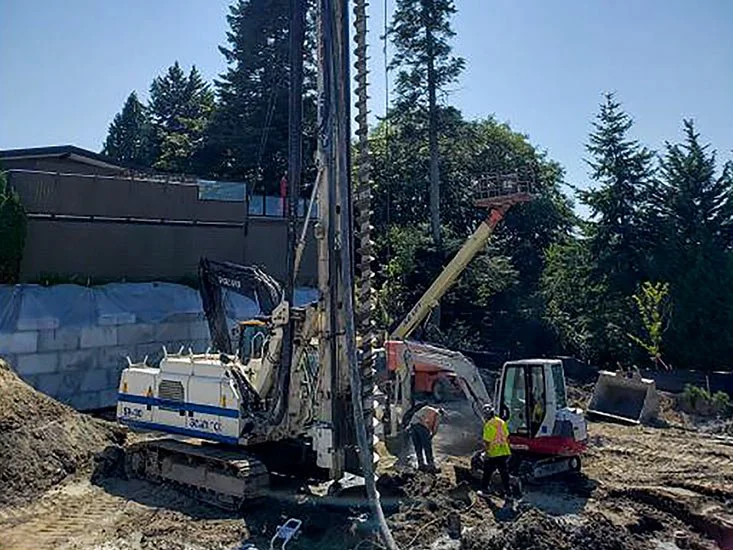
![Construction site with a large pile driver and excavator, two workers in safety vests and helmets, dirt ground, surrounded by trees and a clear sky.]()
Continuous Flight Auger Piles: Tsawwassen House